


NASA Artemis Program
The Artemis program is NASA’s next-generation exploration initiative aimed at establishing a sustainable human presence on the Moon and laying the foundation for long-term crewed deep-space exploration.
Artemis II is the first crewed flight test mission of the Artemis program, in which astronauts will travel to lunar orbit aboard the Orion spacecraft.
Launched on NASA’s Space Launch System (SLS) Block 1, Orion will fly a lunar free-return trajectory.
This mission will enable a comprehensive validation of crewed spaceflight systems and operational performance in the deep-space environment.
K-RadCube Mission
K-RadCube is a 12U-class CubeSat selected as a Secondary Payload (SPL) of the Artemis II mission, with the primary objective of characterizing the space radiation environment in High Earth Orbit (HEO).
This mission represents Korea's first CubeSat to be launched in conjunction with a NASA crewed lunar mission and aims to acquire essential baseline data for radiation risk assessment in future human lunar and deep-space exploration missions.
K-RadCube will operate across a wide range of altitudes, from several hundred kilometers up to approximately 70,000 km, directly observing high-energy particle populations in diverse radiation environments, including regions inside and outside the Van Allen radiation belts.
K-RadCube Payload (K-RAD)
- K-RAD-PD: A silicon sensor–based radiation detector that measures proton and electron fluxes, absorbed dose, and linear energy transfer (LET) spectra, providing essential data for biological radiation effect assessments.
- K-RAD-SS / K-RAD-SK: Technology demonstration payloads designed to directly evaluate radiation effects on commercial semiconductor devices and memory components in the space environment.
K-RadCube Mission Key Information
- Mission Name: K-RadCube
- Mission Type: Artemis II Secondary Payload (SPL)
- Spacecraft Class: 12U CubeSat
- Mission Orbit: High Earth Orbit (~200-70000 km)
- Launch Vehicle: NASA Space Launch System (SLS) Block 1
- Launch Site: NASA Kennedy Space Center, Florida, USA
- Launch Schedule: Aligned with the Artemis II mission timeline (February–April 2026)
- Participating Organizations: Korea Aerospace Administration (KASA), Korea Astronomy and Space Science Institute (KASI), SK Hynix, Samsung Electronics, Nara Space Technology, KT SAT
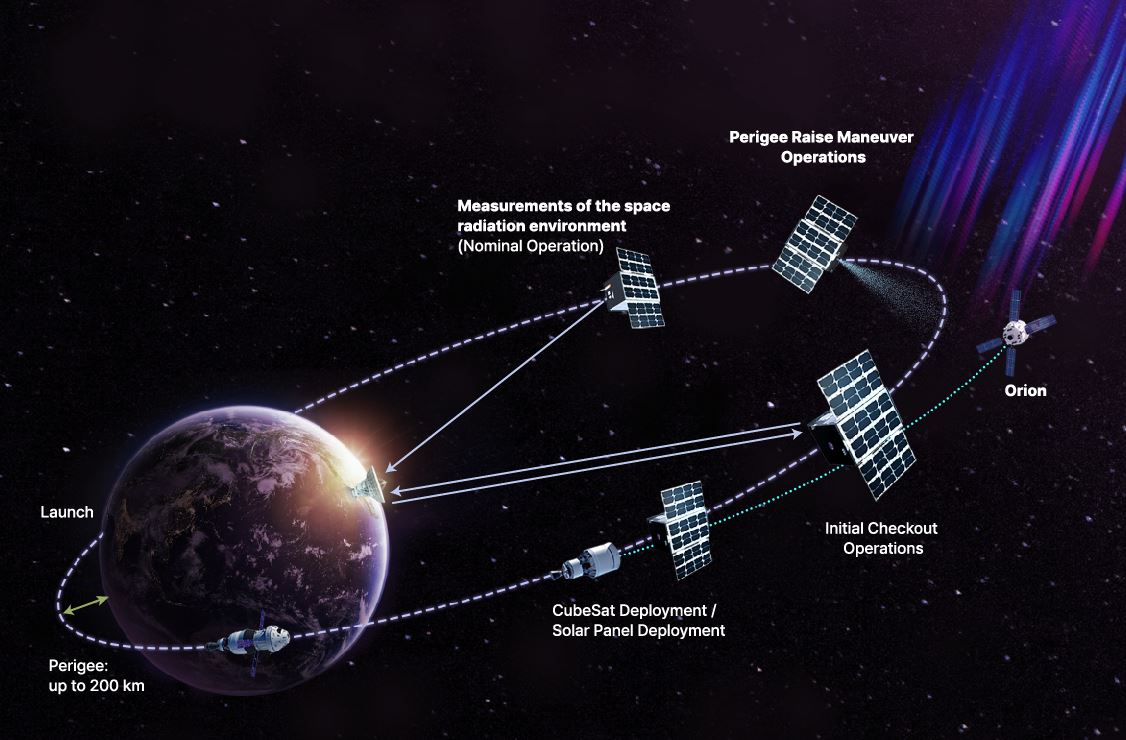 K-RadCube mission orbit overview
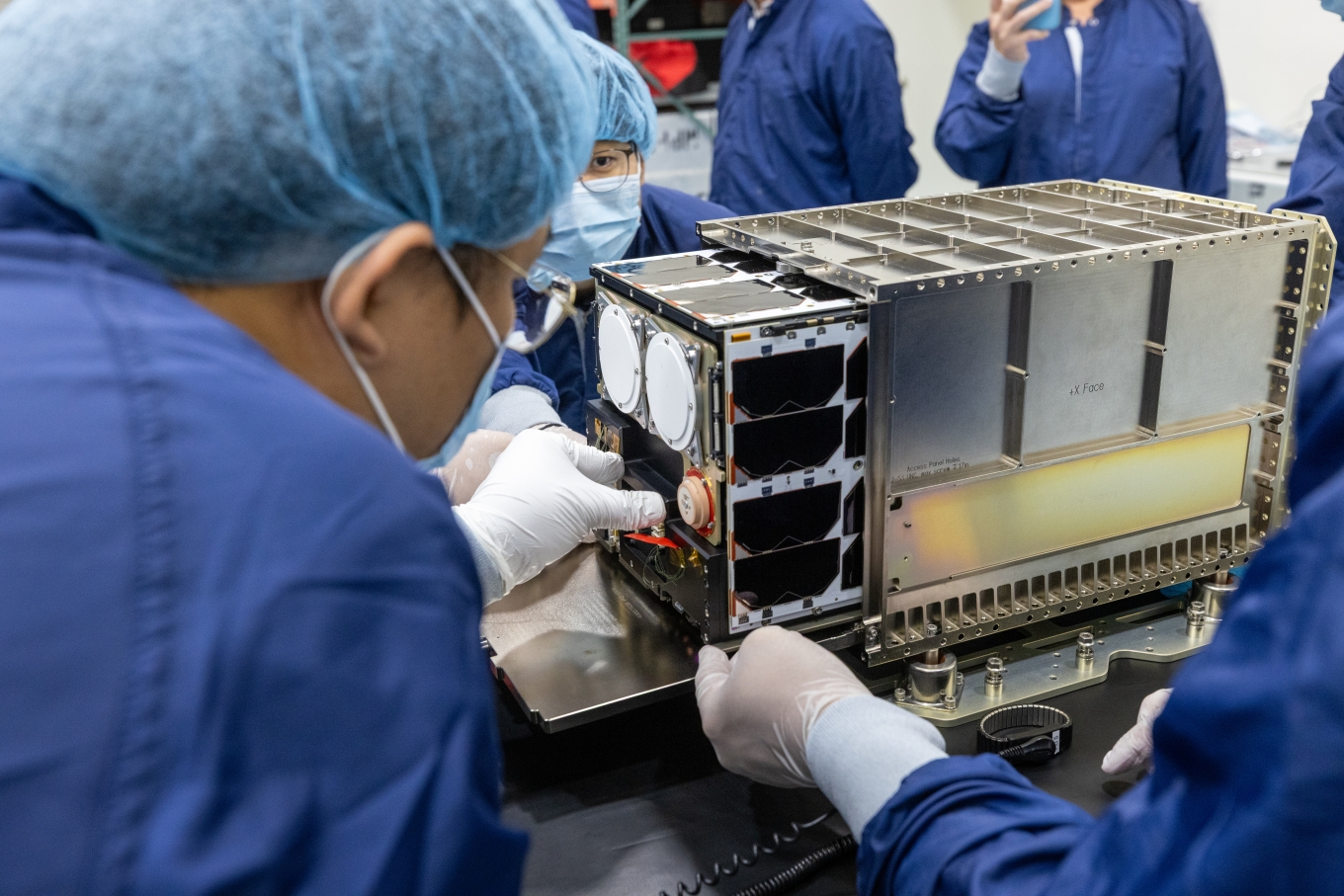 Dispenser integration of K‑RadCube
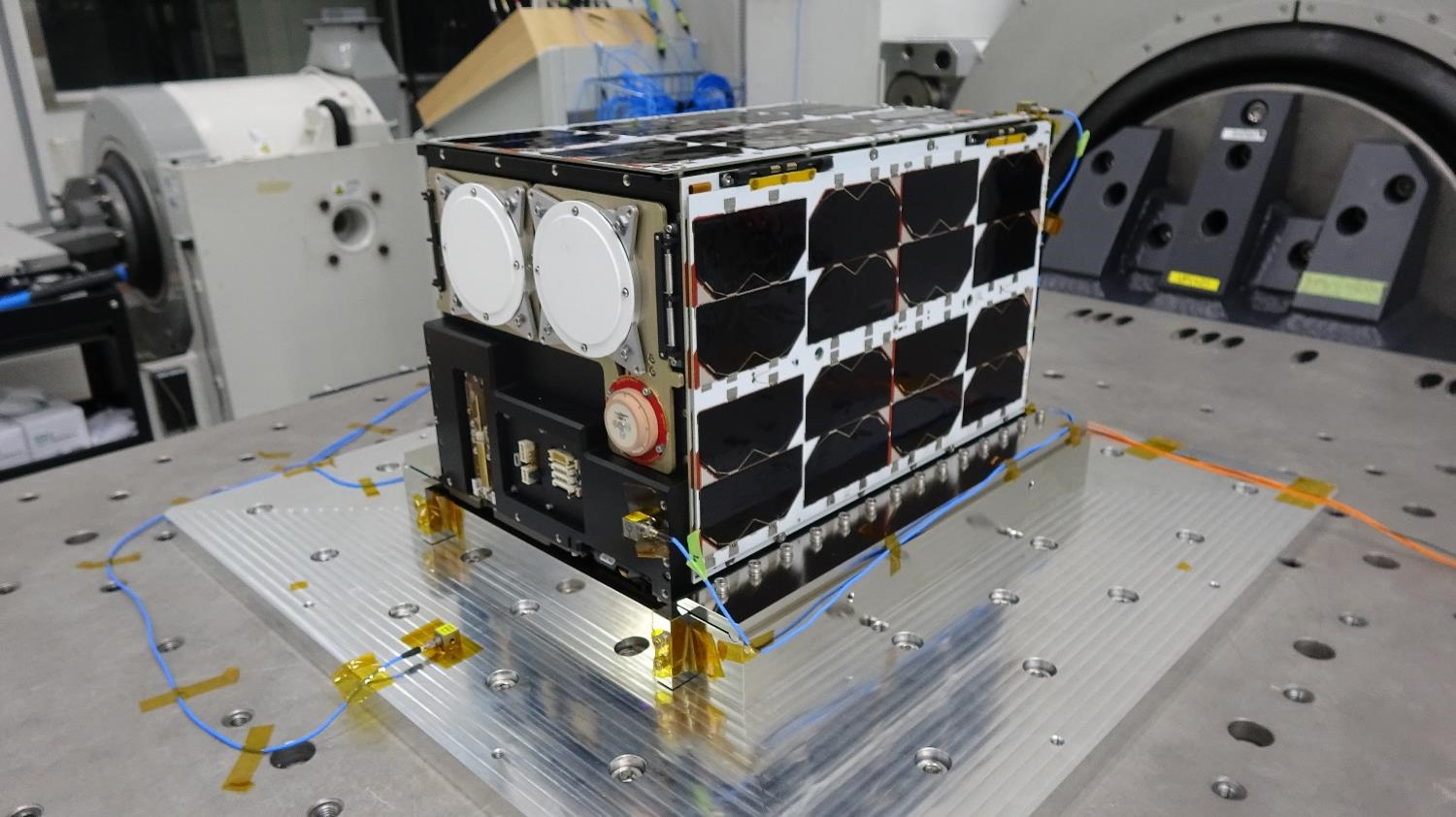 K-RadCube
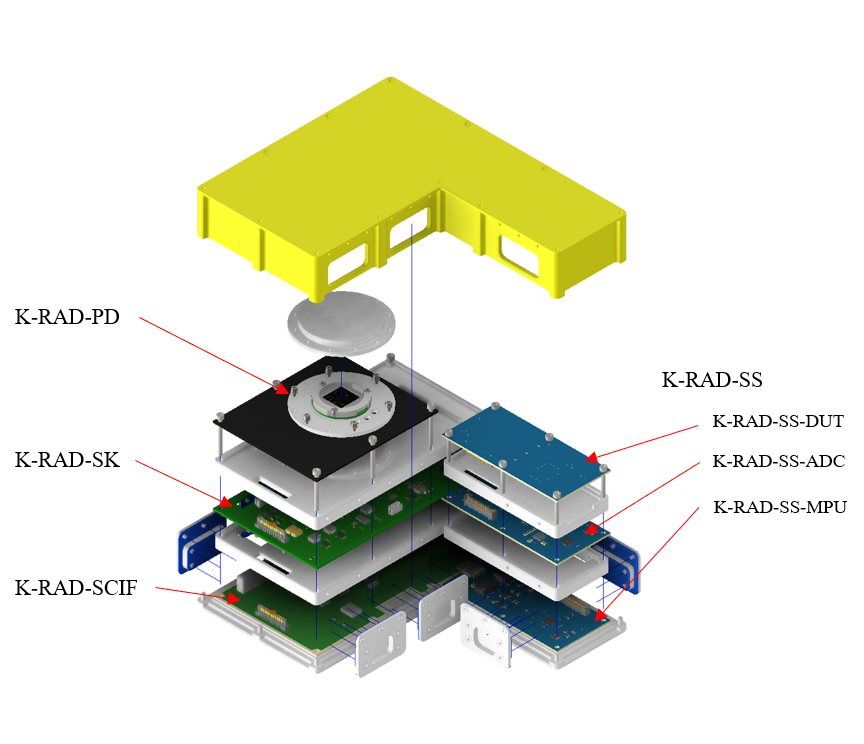 Configuration of the K-RAD